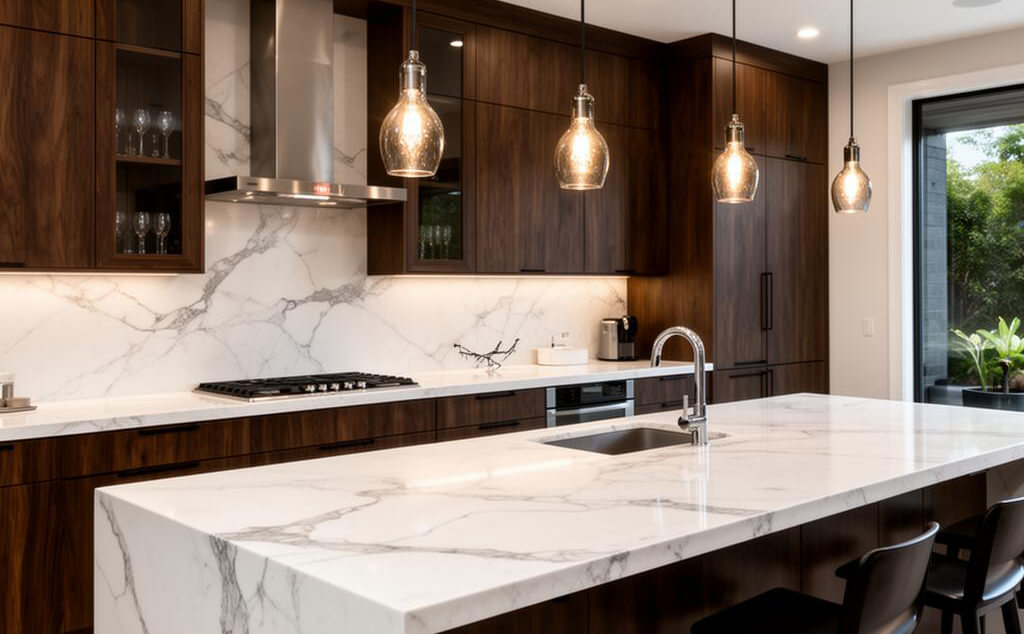
2cm vs 3cm Quartz: Which Thickness Should You Choose?
Choosing the Right Quartz Thickness: 2 cm or 3cm for Installation
When comparing 2cm vs 3cm quartz, slab thickness can directly affect fabrication, transportation, installation, and the support required for the countertop.
Thickness affects the slab’s weight, the transport plan, the number of installers needed for handling, cutting and cutout work, and the strength required from the cabinets or support frame underneath. On upper-floor projects, sites with narrow access, or countertops with multiple sink and cooktop cutouts, choosing the right thickness becomes even more important.
The two most common quartz slab thicknesses are 2 cm and 3cm. Neither is better in every situation; each has its own advantages and is suited to different installation conditions.
1. Comparing 2cm and 3cm Quartz
| Criteria | 2cm Quartz | 3cm Quartz |
| Material and installation cost | Material cost is generally lower. However, if the edge needs to be built up or additional reinforcement is required, the extra fabrication cost should also be included. | Material cost is usually higher because more material is used for the same surface area. Transport and labor costs may also increase. |
| Slab weight | Lighter, which reduces the load on cabinets, framing, and the supporting structure below. | For the same surface area and material, a 3cm slab is heavier, so it requires a sturdier support structure with greater load capacity. |
| Transport and handling | Easier to move on sites with stairs, narrow hallways, or upper-floor access. | Heavier, so it usually requires more installers and a more carefully planned handling and transport method. |
| Cutting, cutouts, and fabrication | Lighter and easier to handle, but extra care is needed around sink and cooktop cutouts and other narrow sections. | Thicker, but the additional weight makes the slab harder to maneuver during fabrication. |
| Cabinets, framing, and support | Should be installed on a properly designed support system, especially across long spans or at overhangs. | Feels more substantial, but still requires suitable cabinets, framing, and support points. |
| Strength and load capacity | Suitable for many applications when properly supported. | The greater thickness provides a larger material cross-section, making it suitable for designs that call for a more substantial build. |
| Risk of cracking or breakage during installation | Extra care is needed at cutout corners, narrow sections between cutouts and edges, and long, slender pieces. | May tolerate handling better in some situations, but the greater weight can also increase the risk of damage when lifting, turning, or transporting the slab. |
| Edge treatment | Works well for a slim profile, or the edge can be built up to create a 4-6 cm look, depending on the design. | Can often be used with its natural 3 cm edge, reducing the need for edge build-up in many designs. |
| Installation time and manpower | Generally easier to handle because of the lower weight. | Large slabs may require additional installers. |
2. 2cm vs 3cm quartz: Key differences
2.1. When to choose 2cm quartz
2 cm quartz is well suited to projects that call for a lighter, more streamlined look. It is also a practical choice when the cabinets or frame already provide solid support and distribute the load properly.
For upper-floor apartments, homes with narrow staircases, or sites with limited elevator access, 2 cm slabs have a clear advantage in transport and handling. Their lower weight gives installers better control when moving the slab through doorways, hallways, or stairs.
If the homeowner wants a thicker-looking countertop, a 2 cm slab can still be finished with a built-up edge to create the appearance of 4 cm, 5 cm, or more. This gives the design more flexibility, but the edge work needs to be precise so the joint looks clean and seamless.
2.2. When to choose 3cm quartz
3 cm quartz works well for countertops that are meant to look solid, substantial, and monolithic. With its full 3 cm edge, many designs can achieve the desired visual thickness without any additional edge build-up.
This thickness is also often considered for larger countertops or designs that benefit from a thicker material section. That said, 3 cm quartz should not be treated as a substitute for proper support. Overhangs, long unsupported spans, and areas with multiple cutouts still need an appropriate support design.
The main consideration is weight. A 3cm slab is significantly heavier, so the cabinets need to be stable enough to support it. The installation team should also plan ahead for manpower, the transport route, and how the slab will be moved into its final position.
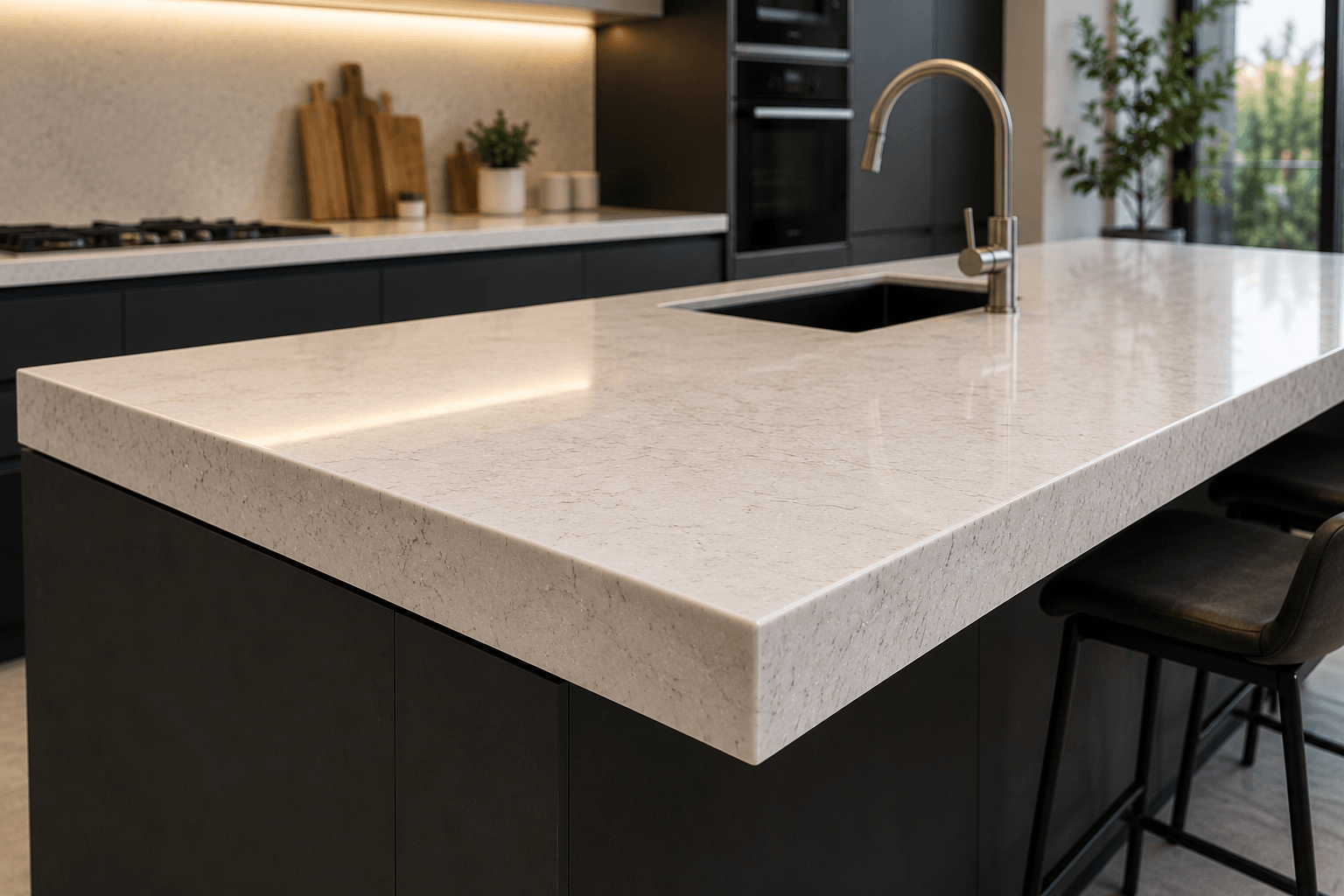
3.What to Check Before Choosing the Thickness
Before deciding between 2cm and 3cm, check the countertop dimensions, span length, sink and cooktop cutout locations, overhangs, cabinet stability, transport route, and site access. These factors help determine whether the chosen thickness is suitable for the required support, fabrication method, and actual installation conditions, or whether the installation plan needs to be adjusted to reduce the risk of cracking or breakage and keep the job safe.
Also consider the finished edge profile. If the goal is a slim, modern countertop, 2 cm is usually easier to achieve. If you want a naturally thicker edge and would prefer to minimize extra edge build-up work, 3cm may be the better choice.
Choosing quartz thickness should not come down to price alone or the assumption that “thicker is always better.” A 2cm slab offers advantages in weight and installation flexibility, while a 3cm slab provides a more substantial feel and a naturally thicker finished edge. The right choice depends on the design, support structure, and the specific installation conditions of each project. See more about WHS Quartz products.