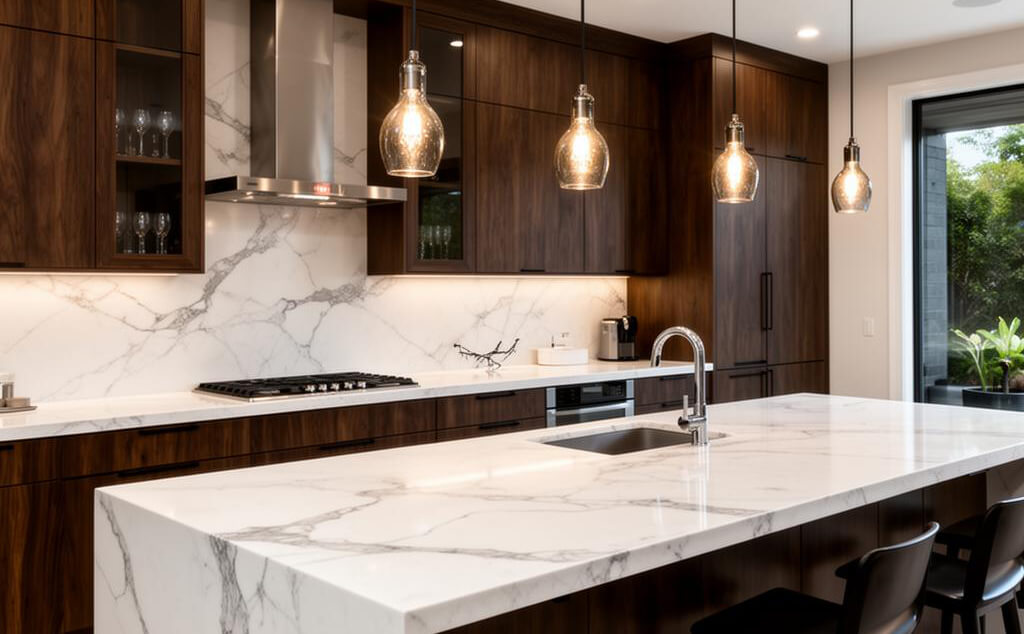
Geometric Pattern Tile: How to Choose and Style It Without Making the Space Feel Busy
Geometric pattern tile features geometric shapes such as squares, triangles, diamonds, hexagons, straight lines, or combinations of different shapes.
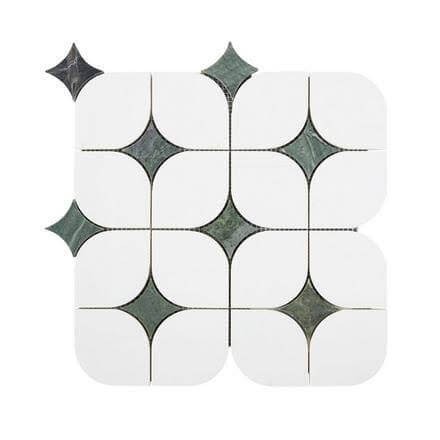
Lines that are straight, triangles, diamonds and hexagons individually look quite easy, but when used to fill a larger area, they give rise to an entirely new effect. That’s what makes geometric tile so eye-catching in a space.
That said, geometric tile isn’t necessarily better just because it has more shapes or colors. If the pattern is too dense or appears in too many areas, the room can quickly start to feel visually overwhelming. So, choosing the right tile isn’t just about finding a pattern you like. It’s also about balancing the scale, colors, and amount of space where the tile is used.
1. Why Does Geometric Tile Easily Draw Attention?
Unlike plain tile, which mainly works as a background, geometric pattern tile becomes part of the overall visual design of the space.
1.1. Repeating Lines Create a Sense of Movement
When triangles, diagonal lines, or diamonds are repeated, the surface has a stronger sense of movement. This can keep a wall from looking too flat or plain compared with traditional solid-color tile.
Simply changing the direction of the layout, grout color, or color combination can also make the same geometric pattern feel completely different.
1.2. Geometric Tile Is Able to Be a Feature
Sometimes, a small kitchen wall or a section of flooring near the entryway is all it takes to give a room its own character.
This is both one of the biggest advantages of geometric tile and something to keep in mind. When the surface already has a lot of lines and shapes, the surrounding furniture and decor don’t necessarily need to stand out as well.
2. Things to Consider Before Choosing Geometric Tile
2.1. Pattern Scale vs. Room Size
In a small room, oversized geometric patterns or strong contrast can easily take up most of the visual attention. In these situations, small- to medium-scale patterns, similar colors, or simpler layouts are usually easier to work with.
Larger spaces have more open areas, so you can experiment with bolder patterns without making the room feel as crowded.
2.2. Colors and Contrasts
White, beige, cream, and gray are generally easy to bring into a home because they don’t put too much visual pressure on the rest of the interior.
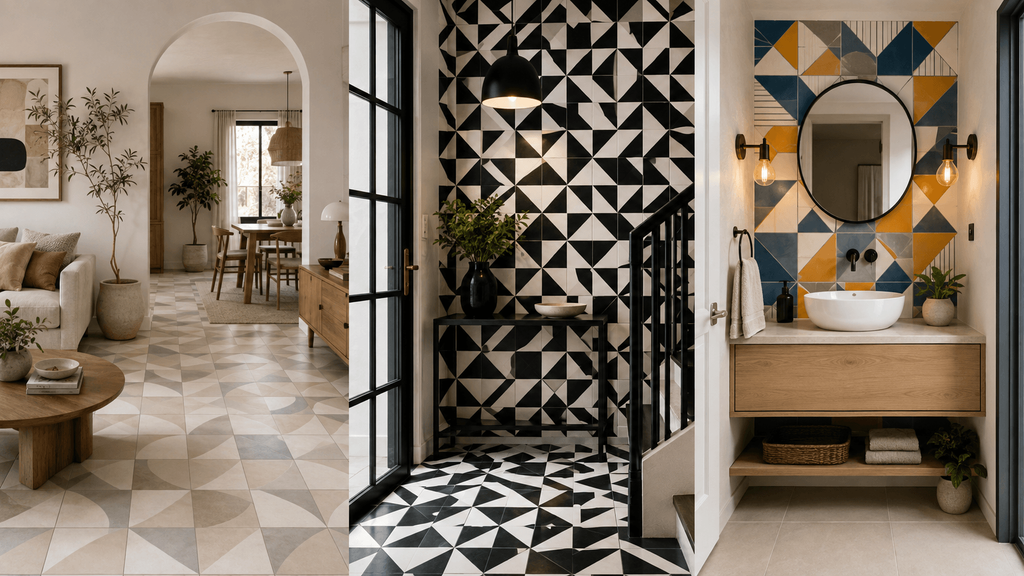
Black-and-white geometric tile has a stronger visual impact. The geometric lines stand out clearly, making it a good choice when you want a particular area to have a stronger personality.
For blue, yellow, orange, or other bold colors, consider using them on a backsplash, around the vanity, or in a small section of flooring to create an accent.
2.3. Look at the Whole Pattern, Not Just One Tile
This is an easy thing to overlook. A single geometric tile may look pretty simple, but when 50 or 100 tiles are installed together, the amount of visual detail increases significantly.
Before deciding on a big space, view pictures of the tiling installed or make a small sample section first. For new designers, checking how the pattern will run across the surface ahead of time can also help prevent the pattern from ending in an awkward spot.
3. Where Can You Use Geometric Tile Without Going Overboard?
You don’t have to cover an entire room. In fact, geometric tile is often easier to use when it’s placed in specific areas that need a visual accent.
3.1. Kitchen Backsplash
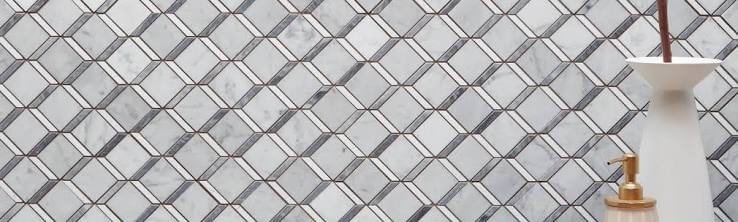
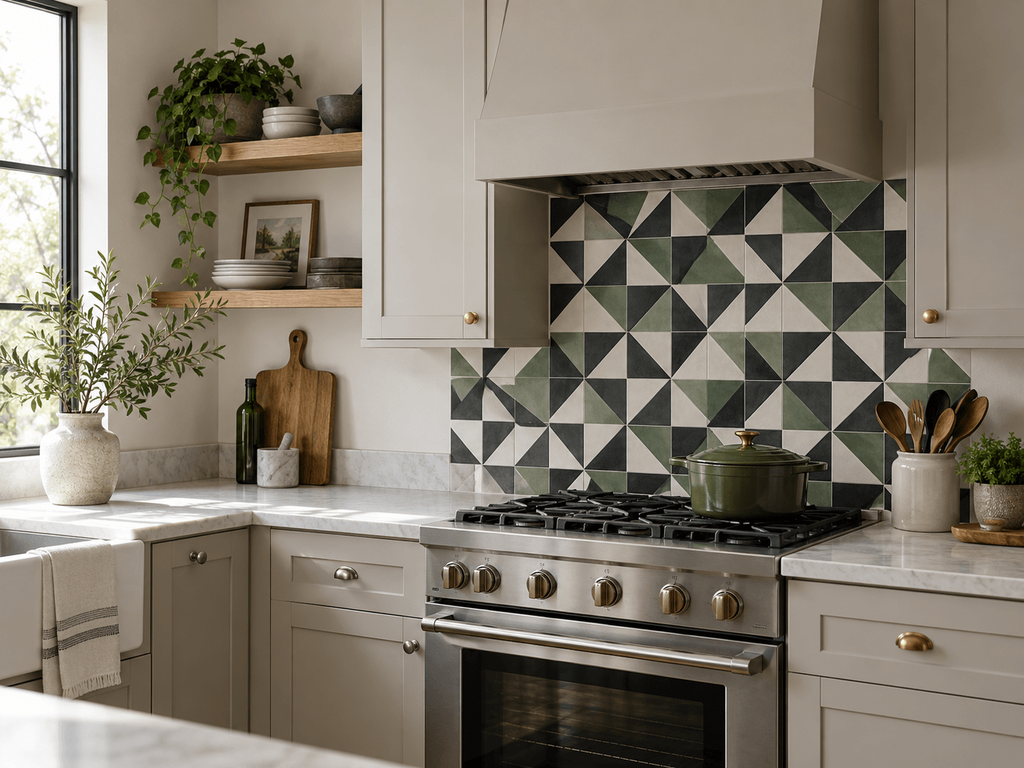
The area is usually a manageable size and sits between the upper cabinets and countertop, so it already has fairly clear boundaries. A tile pattern featuring diagonal lines, hexagons, or diamonds can keep the kitchen from feeling plain without requiring any major changes to the rest of the space.
If the backsplash already has a busy pattern, it’s usually better to keep the kitchen cabinets relatively simple so the space doesn’t feel visually cluttered.
3.2. Bathroom and Vanity Area
Bathrooms have plenty of smaller areas where you can use geometric tile without covering the entire room.
You could use it behind the vanity, on the wall inside the shower area, in a recessed niche, or on a small section of the floor to keep the pattern focused in one specific area.
In a small-sized bathroom, it is always better to have neutral tones or patterns with low contrast. If you want to use a bold color, keeping it to a smaller area can make the overall space feel more balanced.
3.3. Living Room
You don’t need to cover the entire living room floor with geometric tile.
A single accent wall, the area around a fireplace, a decorative corner, or a small section of flooring used to define a particular area may be enough.
This approach also makes it easy to replace the sofa, furniture, or even décor without having to cope with an entire room of loud prints.
4. Choosing Geometric Tile for Different Spaces
| Space | Suggested Pattern Level | Easy-to-Use Colors | Recommended Area |
| Kitchen | Medium | White, beige, gray, black and white | Kitchen backsplash |
| Bathroom | Light to medium | White, gray, blue, neutrals | Vanity, shower area, floor |
| Entryway | Medium to bold | Flexible depending on the interior | A section of flooring |
| Living room | Light | Beige, cream, gray, neutrals | Wall or accent area |
| Café or retail space | Can be bolder | Based on the design concept | Counter, entryway, accent wall |
5. Common Mistakes When Using Geometric Tile
Using the Pattern on Too Many Surfaces
If the floor already has a bold pattern and the walls also feature a similarly strong design, the space can end up with too many competing focal points. Instead of making every surface stand out, choose one main area to be the focus. Keep the other surfaces simple with plain tile or softer colors to give your eyes a visual break.
Overlooking the Grout Lines and Starting Point
With geometric tile, grout lines aren’t simply the spaces between individual tiles. They can actually become part of the overall pattern. The use of contrast in the grout color will ensure that the geometric pattern stands out, whereas using a similar color for the grout will make the tiles seem seamless.
6. FAQs on Geometric Pattern Tile
Should I Use Geometric Tiles for the Entire Floor or Just as Accent Tiles?
It depends on how bold the pattern is. Multicolor or high-contrast patterns are usually easier to work with when used in a limited area. For single-color geometric tile or softer patterns, you can generally use it across a larger area without making the space feel as busy.
Is Geometric Tile Only Suitable for Modern Styles?
Of course not. Tile in geometric designs can look extremely dissimilar in terms of their forms, colors, and material. Black and white usually feels more defined and modern, while beige, cream, and deeper muted tones can create a softer, more relaxed look.
7. Geometric Tile Works Best When You Use Just Enough
The appeal of geometric tile comes from the fact that very simple shapes can completely change the way a surface feels. But because these patterns naturally draw attention, you don’t necessarily need to use a lot of them.
A design that suits the dimensions of the room, as well as the place where it should be used, along with simpler surroundings would perform much better than a geometric design applied everywhere.
If you want to give your floors or walls some personality without using overly complicated patterns, geometric tile is definitely worth considering.